Skip to content

Few things end a summer afternoon in the Finger Lakes faster than a stinging insect. By mid to late summer, yellowjacket and hornet colonies have grown large and active, and carpenter bees have spent the season working their way into wood. Knowing which insect you are dealing with, and which ones genuinely warrant professional help, makes the season safer and far less stressful.
This guide covers the three stinging insects Optimum Pest Pros sees most across the Canandaigua and Rochester area each summer: yellowjackets, bald-faced hornets, and carpenter bees. It explains how to tell them apart, why they become a problem, and when to call a professional rather than handle a nest yourself.
Why Stinging Insects Peak in Late Summer
Most stinging insect colonies start small in spring, with a single queen. Through the warm months the colony grows, and by August and into September it can hold a large, well-defended population. That is why a nest you never noticed in June becomes impossible to ignore in late summer: it has simply grown. Mature colonies are also more defensive, which makes late-summer encounters both more likely and more hazardous than earlier in the year.
Yellowjackets
How to identify them
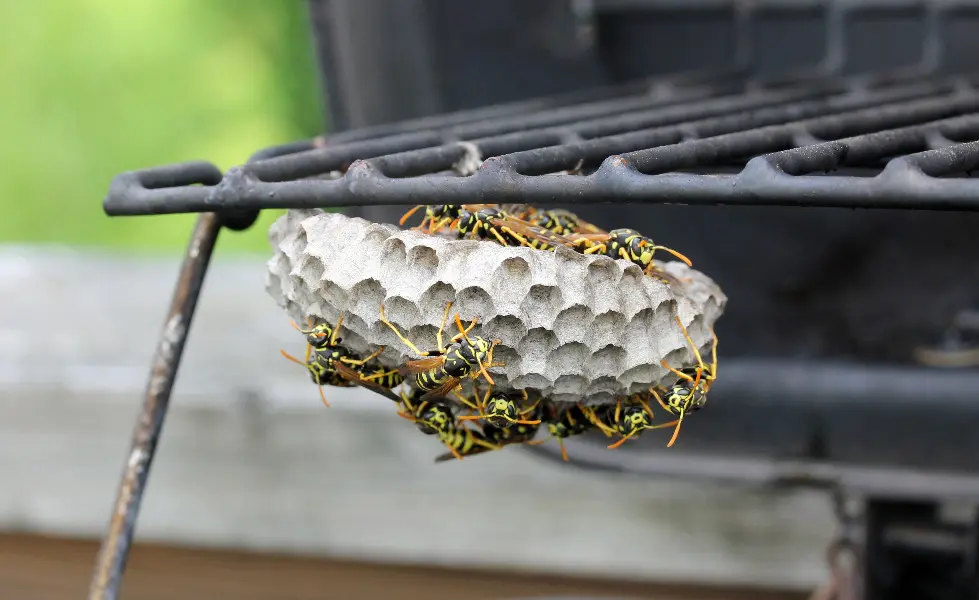
Yellowjackets are wasps, not bees, with bright yellow and black banding and a sleek, narrow-waisted body. They are fast, aggressive when disturbed, and unlike a honeybee, a single yellowjacket can sting repeatedly.
Why they become a problem
Yellowjackets often nest in the ground, in wall voids, or in other concealed spaces, which means people frequently disturb a nest without seeing it first. By late summer they are also drawn to food and sweet drinks, which is why they crash picnics and hover around trash cans. A ground nest struck by a lawn mower is a common and dangerous Finger Lakes summer scenario.
When to call a professional
A yellowjacket nest near a walkway, doorway, deck, or any area people use should be handled by a professional. The nests are defended aggressively, are often hidden, and disturbing one can provoke many stings at once. This is not a do-it-yourself job.
Bald-Faced Hornets
How to identify them
Despite the name, the bald-faced hornet is a type of wasp. It is larger than a yellowjacket, black with a distinctive white or ivory pattern on the face and body. Its nest is the one most people picture when they think of a hornet: a large, gray, papery, football-shaped structure, usually hanging from a tree branch, a shrub, or the eave of a house.
Why they become a problem
Bald-faced hornets are highly defensive of their nest and will respond in numbers to a perceived threat. The nest can grow to the size of a basketball or larger by late summer. Because the nests are often up off the ground and clearly visible, homeowners are sometimes tempted to knock one down. That is a serious mistake.
When to call a professional
Any bald-faced hornet nest near the home should be treated as a professional job. The aggressive defense, the size of a mature colony, and the height of many nests all make removal hazardous. Attempting it with a spray can or a long pole regularly leads to multiple stings.
Carpenter Bees
How to identify them
Carpenter bees look much like bumblebees, large and robust, but a carpenter bee has a shiny, mostly hairless black abdomen rather than the fuzzy striped abdomen of a bumblebee. In early summer you often see them hovering near eaves, decks, railings, and fascia boards.
Why they become a problem
Carpenter bees do not eat wood, but the females bore neat, round tunnels into it to nest. A single hole looks minor. The problem is that carpenter bees return to and expand the same wood year after year, and over time the galleries weaken it. Woodpeckers hunting the larvae inside can enlarge the damage further. Male carpenter bees hover and act territorial, which is alarming, though it is the females that can sting.
When to call a professional
Carpenter bee activity is worth a professional assessment when you see multiple holes, returning activity each year, or signs of expanding damage. Addressing it properly protects the wood from becoming a recurring, worsening problem.
A Word on Honeybees
Not every stinging insect should be eliminated. Honeybees are valuable pollinators, and a honeybee swarm or colony is a different situation that often calls for relocation by a beekeeper rather than extermination. Correct identification matters, and it is one more reason a professional assessment is worthwhile before anything is done. A licensed technician can quickly tell a honeybee colony from a wasp or hornet nest and recommend the right path for each. For honeybees that often means referral to a beekeeper for relocation; for an aggressive wasp or hornet nest near the home it means safe professional removal.
What Draws Stinging Insects to a Finger Lakes Property
Understanding what attracts stinging insects helps explain why some properties see more activity than others, and what you can influence. Yellowjackets in particular are drawn to easy food: open trash, fallen tree fruit, pet food left outdoors, and the sugary drinks of a backyard gathering. Reducing those food sources makes a property less appealing, especially late in the season when colonies are foraging hard.
Nesting opportunities matter just as much. Yellowjackets exploit abandoned rodent burrows and gaps in the ground, as well as voids in walls and under decks. Bald-faced hornets favor sheltered branches and eaves. Carpenter bees seek out bare, weathered, or unpainted wood, which is why decks, railings, and fascia boards are frequent targets. Sealing gaps, keeping wood painted or sealed, and addressing rodent burrows all reduce the openings a colony can use.
It also helps to do a slow walk of the property in early summer, before colonies are large. A nest the size of a golf ball in June is far easier and safer to address than the same nest grown to full size in September. Early detection is the cheapest form of stinging insect control there is.
Staying Safe Around Stinging Insects This Summer
A few habits reduce the risk through a Finger Lakes summer. Keep food and sweet drinks covered outdoors, and keep trash cans closed, since both draw yellowjackets. Look before you mow or trim, especially around the ground and shrubs where nests hide. Stay alert near eaves, decks, and railings that carpenter bees and hornets favor. And if you find a nest, keep your distance and resist the urge to deal with it yourself. The single most important safety rule is that nest removal near the home is a job for a professional, particularly for anyone with a known sting allergy.
Optimum Pest Pros provides stinging insect removal across Canandaigua, Rochester, and the surrounding Finger Lakes communities, with licensed technicians and more than 10 years of experience.
Frequently Asked Questions
How can I tell a yellowjacket from a bee?
Yellowjackets are wasps, with bright yellow and black banding and a sleek, narrow-waisted body, and they can sting repeatedly. Bees are generally fuzzier and rounder. The distinction matters: a honeybee colony may call for relocation by a beekeeper, while a yellowjacket nest near people is a removal job.
Is it safe to remove a hornet nest myself?
No. Bald-faced hornet nests are defended aggressively by a large colony, and many nests are up high, which adds a fall risk. Knocking one down or spraying it regularly results in multiple stings. Any hornet nest near the home should be handled by a professional.
Do carpenter bees damage a house?
Carpenter bees do not eat wood, but females bore round tunnels into it to nest, and they return to and expand the same wood year after year. Over time the galleries weaken the wood, and woodpeckers hunting the larvae can enlarge the damage. Multiple holes or recurring activity warrant a professional assessment.
Why do stinging insects get worse in late summer?
Most colonies start small in spring with a single queen and grow all season. By August and September a yellowjacket or hornet colony can hold a large, well-defended population, and mature colonies are more defensive, so late-summer encounters are both more common and more hazardous.
What should I do if I find a nest near my door or deck?
Keep your distance, keep children and pets away, and do not attempt to remove it yourself. A nest near a doorway, walkway, or deck is exactly the situation that calls for professional removal, because disturbing it can provoke many stings at once. Contact a professional to handle it safely.
Does Optimum remove stinging insects throughout the Finger Lakes?
Yes. Optimum Pest Pros provides stinging insect removal across its service area, which includes Canandaigua, Rochester, and many surrounding Finger Lakes communities. A professional can also confirm the species, which matters when honeybees are involved.